


Myanmar Hopong Phar Moon
Myanmar.
STATION: Phar Moon
LOCATION: Hopong, Myanmar
CULTIVARS: Arabica S – 795, Catimor, Caturra, Catuai, Bourbon
EXPORTER: Indigo Mountain
IMPORTER: This Side Up Coffees
ROASTER: Special Roast
Myanmar Hopong Phar Moon - coffee specs
What to taste for:
Aroma: dried berries, flowers
Body: thick, stone fruit and floral
Acidity: gentle and rounded
Aftertaste: citric with bakers chocolate
PROCESSING YOUR COFFEE
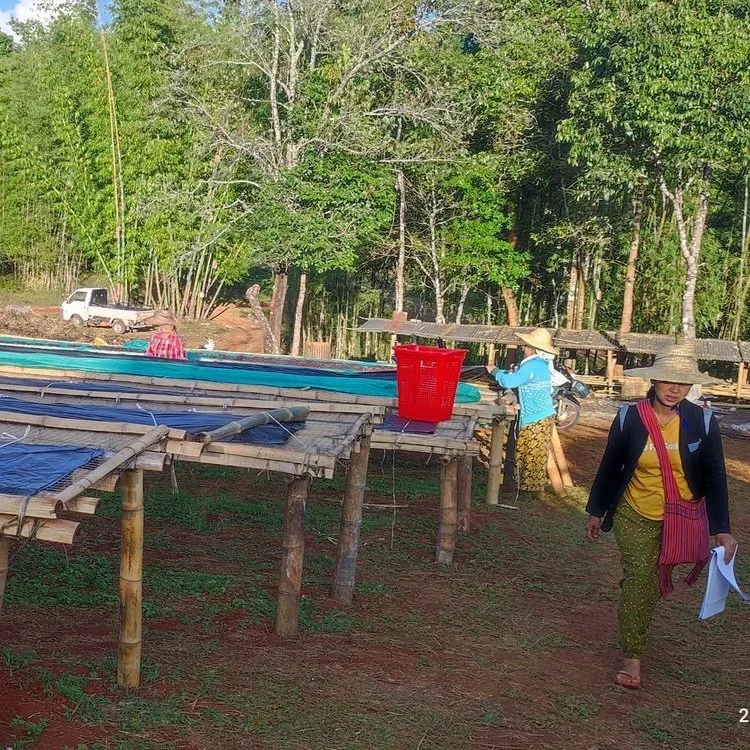
Sun dried natural process: Cherries are hand picked by Hopong community members in the early hours of the day. Once collection is finished, members deliver cherries to Hopong drying stations. On delivery, cherries are screened and handpicked to about 95% cherry ripeness level. Fully ripe cherries are then placed on raised beds. Slow drying is a priority and drying times range between 13-17 days depending on weather conditions. All lots are separated by day and all members’ deliveries are fully traceable.
ROASTING YOUR COFFEE
We use a 22kg Probat UG22 roaster, that has been built in 1965. The roast time is 11 minutes. After the first crack, the coffee is roasted for a remainder of 25% of the time. To obtain the best flavor and taste each coffee or blend has a unique roast profile.
Relative price breakdown:
62%
The price Indigo Mountain pays farmers for their dried cherries as p/kg price of green (milled) coffee. This includes a premium we pay Indigo Mountain to reward the supreme quality they produce. This is invested in quality training for new members, roads and drying facilities.
18%
Amayar (dry mill) costs incurred: milling and packaging, local logistics from farm to mill/ from mill to port of Yangon, local taxes; quality control and marketing. They are also responsable for other things, such as picking up parchment on each village
6%
International shipping, customs, insurance, local haulage from the port of Rotterdam and offloading in our warehouse.
14%
Importing, financing, shipping bureaucracy, sampling and financing costs for This Side Up Coffees.
About the farms
In Hopong, hope comes in the form of coffee. An opportunity for many farmers to leave poppy farming. The harvesting of this controversial flower forces a way of living that is not only exhausting, but dangerous and extremely stressful. Coffee, on the other hand, is a project that becomes theirs. Farmers can see their trees grow and evolve; they own long-term projects, and, given the positive results over the past 10 years, securing a future for their families becomes palpable. After the UNODC spread the initial effort in eradicating poppy in 2014, Khun Saw Tun Aung and Khun Win Maung sought the resources to make their coffee better to get a better price, and sell it to the international market.